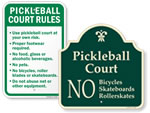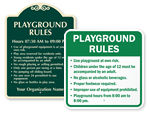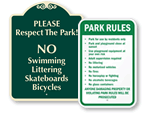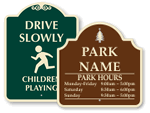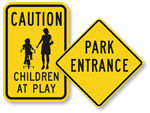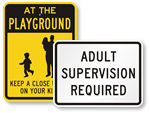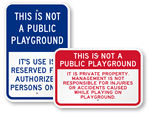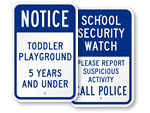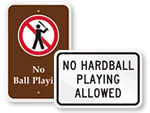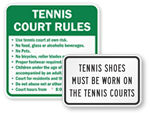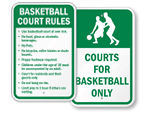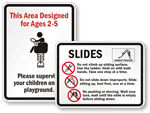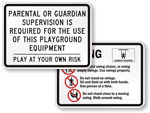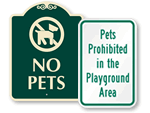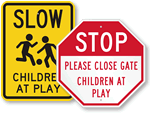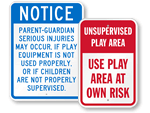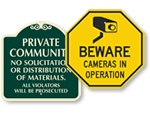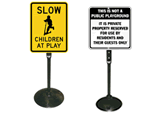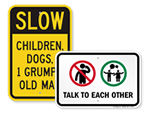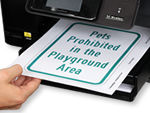
Our signs like “Sorry But Due To Insurance Liability, No Pets Allowed, Thank You” or simpler “Sorry No Dogs Allowed” can help you get away with pets without being blunt. You can be more specific with signs like “No Dogs Allowed On Tennis Courts, Thank You.”
These signs are a courteous way to refuse entry to all pets. To convey your message funnily, you can use our “Dear Dog - Please Tell Your Owners Not To Allow You Near This Playground. This Is A Children Play Area” sign. Avoid signs with “Notice”, “Attention”, and other straightforward headers. Signs in a polite and humble tone with words such as Please and Thank You work wonders. You must try designer signs with a dome-top or oval shape, elegant border, and beautiful motif design that look pleasing and automatically weaken the harshness of any message.
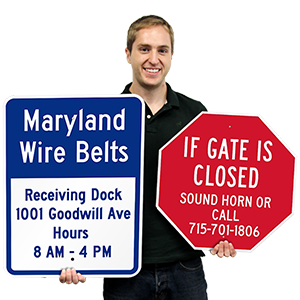
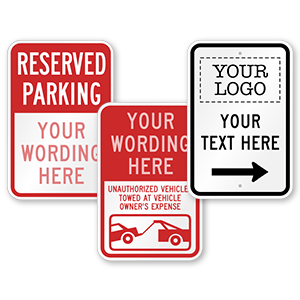
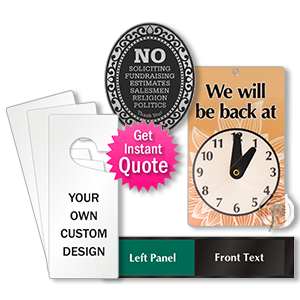
Even better, feel free to create your own customized playground sign at no extra cost, to send out the exact message you want.
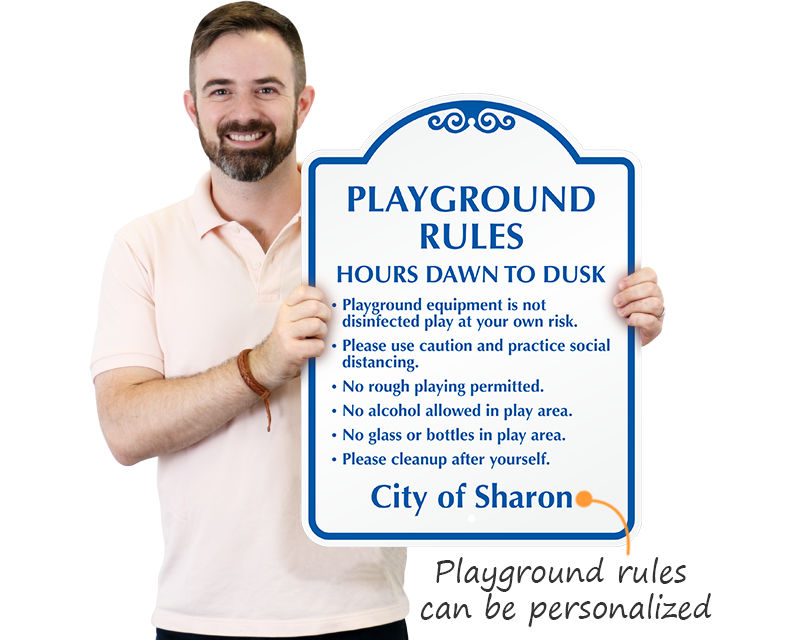
Yes. Explore our collection of Playground Hours Signs. You will find customizable templates here. Just click on the design you like and add your opening and closing hours and the days of a week on which the playground is open for entry. You can add additional information regarding timings, rules, after hours, etc. too.
Aluminum signs are quite durable for playground signage. The 40 mil version has an outdoor life of at least 7 years, while the 63 mil thick version easily lasts for 10 years. The 40 mil signs come with steel stakes for some designs and offer an outdoor life of 10 years. The reflective Designer Playground Signs are very thick (80 mil) and durable too. If greater durability is required, go for Diamond Grade reflectivity (12+ years), High Intensity (10+ years), or Engineer Grade reflective signs (7 to 10 years). Laminated plastic labels carry an outdoor warranty of 5 years.
Yes, we do have signs for the following play courts:
There are rules signs for activities on Trampolines, Tracks, Batting Cage, Skate Parks, paintballs, and Climbing walls.
We offer Custom Playground Signs which can be personalized with your own text. That text can include your playground’s name, park’s name, property name, or any other text you want. The customization process is very simple - just type in your text in the customization box, adjust the font, alignment, spell check, and you’re done. And all this is for free! You can even call our customer service, and they can help you create a sign from scratch.
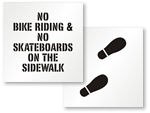
Playground Stencils are made of ABS plastic that does not absorb the paint, and flexing or bending causes dry paint to crack, flake, and peel right away. Still, if any paint is left on the stencil, you can soak it in soapy water for easy clean-up, and it becomes ready and looks brand new for the next use. Stencils should be stored flat and face down at room temperature.
Some of our Playground Equipment Signage is made of flexible material and supplied with adhesive backing (check out our Hot Play Surface Sign), so it can be applied directly on the surface of the play equipment like slides, swings, see-saws, climbing walls, and other rides. Just remove the paper liner, and Our Engraved Playground Signs are also provided with peel-and-stick foam adhesive strips for easy installation.
Our aluminum “3M’s 10-year warranty” marked signs will be free from defects in materials and workmanship for ten years from the date of purchase. This warranty is provided by 3M, the pioneer in reflective films, inks, and laminates. See our terms for more details on the warranty.
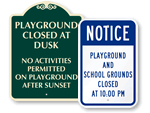
Reflective Playground Signs offer great visibility after the sunlight. Most playground gates close after dusk. With a reflective film on the top, it becomes much easier for visitors to see in low light conditions if any such notice is posted outside the playground. Reflective Playground Hours Signs are great for entrances and parking lots where anywhere can see if the playground is open.